In an increasingly complex business landscape, the concept of Human Design merges psychological insights with strategic planning, offering you innovative pathways to harness your team’s strengths. Human Design integrates ancient wisdom with modern science, including quantum physics, to provide a comprehensive framework for personal and organizational growth.
This blend empowers advanced leaders like you to foster dynamic organizations capable of adapting and thriving amidst change. By integrating your unique Human Design into your strategic planning, you can navigate organizational transformation with greater clarity and purpose. Human Design also helps individuals and organizations understand their unique place and purpose in the world. Each Human Design type has a unique strategy for engaging with the world and specific strengths that contribute to sustainable success.
Key Takeaways
- Integrating Human Design into strategic planning enables organizations to harness individual strengths for greater adaptability and clarity during transformation.
- Understanding your team’s Human Design type, Manifestor, Generator, Manifesting Generator, Projector, or Reflector, guides your decision-making and interaction strategy.
- Empathy mapping is crucial for creating a positive workplace culture by addressing the needs and aspirations of both employees and clients.
- Co-creation workshops foster collaboration, ensuring diverse perspectives are included in the strategic planning process.
- Utilizing iterative feedback loops demonstrates a commitment to ongoing improvement, enhancing team engagement and responsiveness to changes.
What is Strategy in Human Design?
Strategic planning in Human Design revolves around understanding individual and collective energy patterns within your organization. Built on a system that integrates astrology, the I Ching, the Kabbalah, and the Chakra system, Human Design gives you a map of how you and your team can operate in alignment with your true selves. Human Design can also inform the optimal business structure for different types, helping you align your organizational model with the unique energy patterns of your team members.
By leveraging Human Design, organizations can guide their overall strategy by aligning leadership and team strengths, ensuring that priorities and transformation initiatives are developed collaboratively and in harmony with each person’s energetic blueprint.
After identifying your Human Design type, you gain insight into your natural decision-making authority, which is essential for making choices that are authentic and effective.
How to Use Your Strategy in Human Design
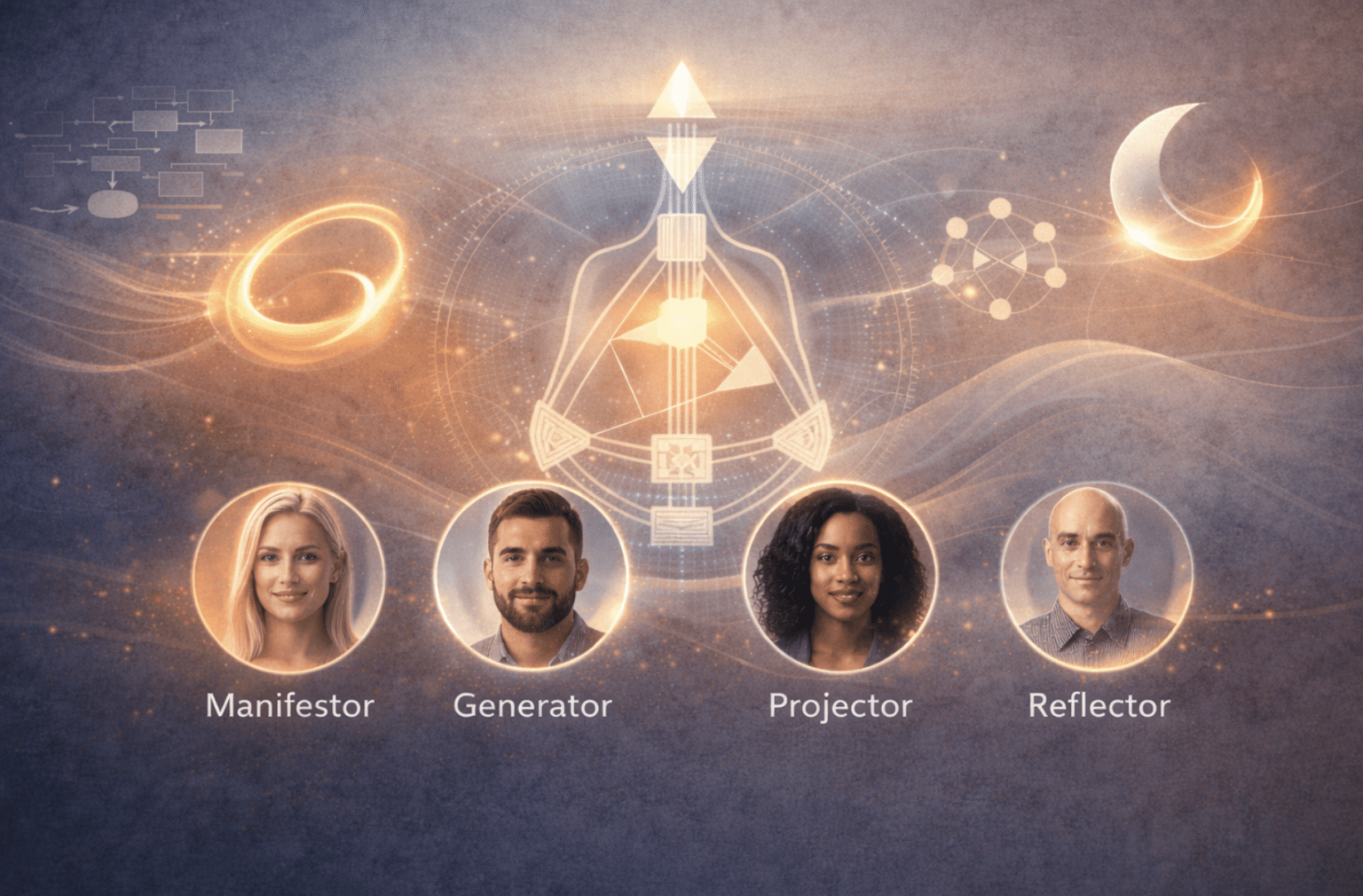
To effectively use your strategy, start by determining your type: Manifestor, Generator, Projector, or Reflector. Each type has a specific strategy that guides how you should navigate decision-making and interaction within your organization.
-
Manifestors initiate action. Your strategy is to inform others before you act, which can minimize resistance. Understanding your energy cycle allows you to plan projects more realistically and set timelines that don’t require constant self-override.
-
Generators respond to external cues. You thrive when you listen to your gut instinct and engage with what excites you. Understanding your energy cycle allows you to plan projects more realistically and set timelines that don’t require constant self-override.
-
Manifesting Generators combine the qualities of Manifestors and Generators. Your strategy involves responding to opportunities with your sacral energy and informing others to reduce resistance, allowing you to move efficiently through multiple interests. Generators and Manifesting Generators thrive when responding to stimulating questions and challenges rather than being directed what to do. Understanding your energy cycle allows you to plan projects more realistically and set timelines that don’t require constant self-override.
-
Projectors guide others. Your role is to wait for invitations before sharing insights, ensuring that your advice is valued and acknowledged. Understanding your energy cycle allows you to plan projects more realistically and set timelines that don’t require constant self-override.
-
Reflectors assess the environment. Take time to reflect on decisions and your surroundings, as this will inform your unique vision. Understanding your energy cycle allows you to plan projects more realistically and set timelines that don’t require constant self-override.
By aligning your strategic initiatives with these intrinsic traits, you can optimize productivity, enhance team cohesion, and foster an adaptive organizational culture. It’s important not to force actions or energy that are not aligned with your design, as this can lead to exhaustion or misalignment.
For example, a Projector leading a team of Generators can enhance efficiency by recognizing their strengths and ensuring others are informed to take action. Having a well-thought-out plan that aligns with your energy patterns allows you to plan projects, reduce resistance, and cultivate a thriving work environment. This tailored approach not only elevates your leadership but also cultivates a thriving work environment.
Human-centered design in organizational transformation
The essence of human-centered design in organizational transformation lies in prioritizing the experiences and needs of individuals, both employees and clients. Engaging your audience—including end-users, stakeholders, and customers—throughout the transformation process is crucial to developing solutions that truly address their needs. Involving customers in testing and feedback ensures that the services and tools provided are effective and relevant.
Tailoring marketing strategies to different Human Design types helps organizations connect with their audience more effectively by leveraging unique strengths and communication styles. Involving staff at all levels in the planning process fosters a sense of ownership and loyalty, which can reduce turnover and related costs.
Stakeholder mapping helps identify the most impacted individuals and gives them a voice early in the process, building greater ownership and engagement. Active listening through in-depth interviews and observation uncovers deep insights, moving beyond surface-level data points to inform more meaningful solutions. This method ensures that your strategies are inclusive and grounded in actual user experiences.
Build a Structure that Supports the Transformation Strategy
Creating a framework that embodies human-centered design involves several key steps:
-
Empathy Mapping: Start by fostering empathy within your leadership teams. Understand the needs, aspirations, and pain points of your employees. This step is crucial for shaping a positive workplace culture. Engaging a broad audience—including a diverse roster of staff and stakeholders—during this phase enhances ownership and increases the likelihood of effective implementation.
-
Co-Creation Workshops: Engage with your teams in workshops where ideas, concepts, and strategies are developed collaboratively. Structured engagement methods like Lightning Decision Jams and Gamestorming sessions help participants co-create solutions that reflect shared understanding and ownership. This promotes buy-in and ensures diverse perspectives are considered in the decision-making process.
-
Prototyping Solutions: After gathering insights, prototype solutions aligned with your strategic vision. Fostering a creative environment during this stage encourages innovation and responsiveness, helping teams align business strategies with individual leadership styles. Prototyping and testing strategic initiatives early helps organizations identify flaws before a full-scale rollout, allowing for timely adjustments.
-
Iterative Feedback Loops: Establish an ongoing mechanism for feedback where team members can voice their thoughts and experiences as initiatives roll out. Building ongoing feedback loops through Build-Test-Learn cycles promotes continuous refinement of strategies. The integration of Human Design principles into ongoing planning and professional development ensures alignment of energy and leadership styles for sustainable growth. Maintaining a single digital hub to house research and updates prevents the strategic plan from becoming abandoned and keeps everyone informed.
Strategic storytelling connects the plan to a deeper purpose and organizational values, inspiring action and commitment across all levels.
By incorporating human-centered design principles, you’ll create a strategy that’s not only effective but also resonates with your organization’s values and culture. This approach enhances agility, as teams become more responsive to internal and external changes, and fortifies the foundation for sustainable growth.
Energy Management and Decision Making
Effective energy management is at the heart of strategic planning and successful business leadership. By leveraging Human Design, you can align your decision-making process with your natural energy patterns, leading to more sustainable and impactful business outcomes. Understanding your unique Human Design type—whether Manifestor, Generator, Manifesting Generator, Projector, or Reflector—enables you to adapt your approach to business decisions, ensuring that your actions are both efficient and authentic.
Each Human Design type brings a distinct energy dynamic to the table. Manifestors are natural initiators, thriving when they lead new projects and inform their teams before taking action. Generators and Manifesting Generators excel when they respond to opportunities that genuinely excite them, channeling their energy into projects that feel aligned with their purpose. Projectors are most effective when they wait for recognition and invitations, allowing them to guide others with valuable insights. Reflectors, on the other hand, benefit from observing cycles and taking time to reflect before making important choices, ensuring their decisions are in harmony with the broader business context.
Incorporating energy management into your business strategy means planning projects and intensive work periods around your team’s natural energy flows. For example, using focus groups to gather insights during high-energy phases can spark new ideas and innovative solutions, while scheduling regular rest periods helps prevent burnout and supports long-term growth. This human-centered approach to decision making not only enhances productivity but also fosters a culture of self-awareness and mutual support within your organization.
The decision-making process is further refined by recognizing the impact of the emotional wave, particularly for Manifesting Generators. By allowing time for emotional clarity before making significant business decisions, you can avoid decision fatigue and ensure that your choices align with your big picture strategy. This approach empowers leaders to move beyond the status quo, tapping into their natural strengths and those of their team members to create a structure that supports both individual and organizational success.
In today’s competitive business environment, energy management is essential for developing innovative solutions and maintaining a sustainable edge. By understanding your own and your team’s Human Design, you can identify areas for improvement, adapt your strategy to changing circumstances, and unlock your full potential. Whether you’re leading a focus group, planning a new project, or navigating challenges, integrating Human Design into your business strategy provides a powerful tool for making informed, human-centered decisions that drive success.
Ultimately, embracing your unique energy signature and adopting a human-centered approach to leadership will help you create a business model that feels aligned with your mission and values. By supporting your team with the right tools, fostering a culture of understanding, and prioritizing energy management, you can lead your organization toward greater innovation, growth, and long-term success.